2-2-04
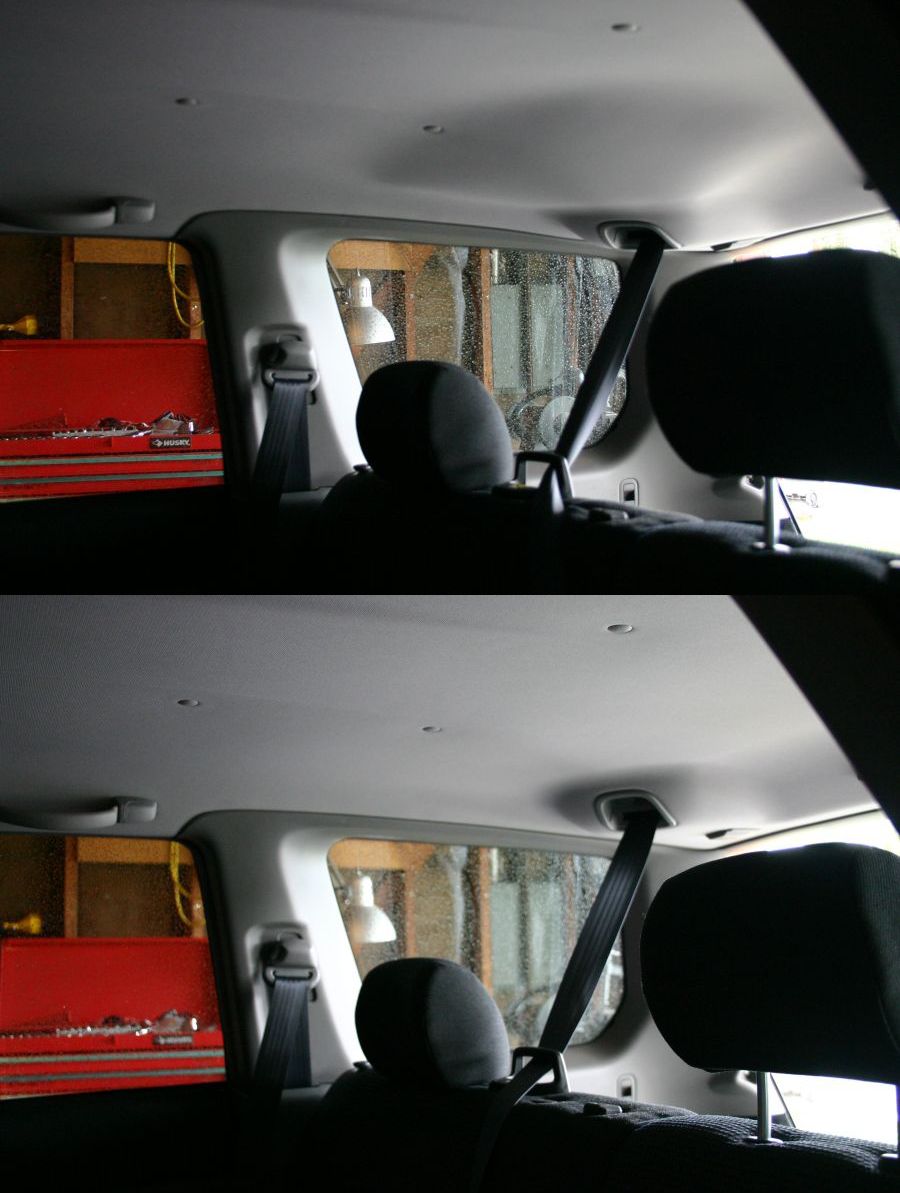
I discovered a problem with the rear seatbelt on my 2004 Forester XT. The seatbelt located in the headliner pocket does not seem to be very strong. When I pull on the belt with about 65lbs (measured with a spring scale), the whole headliner caves in.
2-4-04
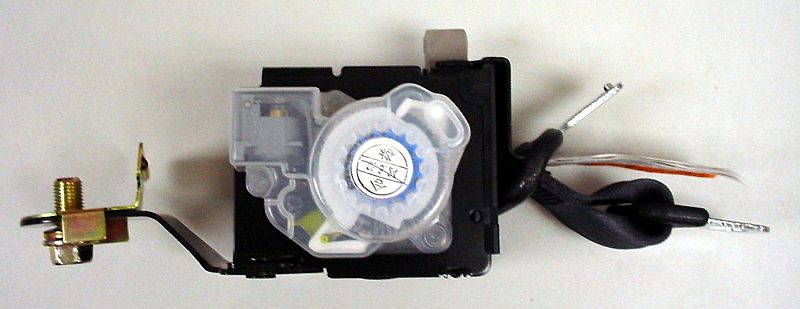
I pulled the belt assembly out and was amazed to find out how thin (0.083" x 1.38") the metal was. I did some quick calcs, and a Finite Element Analysis. Results from both methods seem to agree, the bracket is not designed for the loads applied to it.
Here's a quick example: take a pen and pull on it. It may take a hundred pounds to damage it in pure tension. Now secure one end of the pen such that it makes a cantilever beam, and hang 1 lb on it, the pen will likely break. Note: the top surface of the pen is in tension, the bottom of the pen is in compression, somewhere in the middle is the neutral axis where there is zero stress. I beleive the forester seatbelt bracket was designed for pure tension loads, NOT bending loads.
The shoulder belts for the other seats in the subaru forester are impossible to load in anything but pure tension because there is a belt guide forcing the belt in the correct direction. The only way to load it with a bending load is to remove the belt guide, plastic side panels, and likely the seats. The belt guide for the rear center seat causes the belt to be angled at 45 degrees. 65 lbs of belt tension results in 46lbs pure tension and 46lbs pure bending moment acting on the bracket.
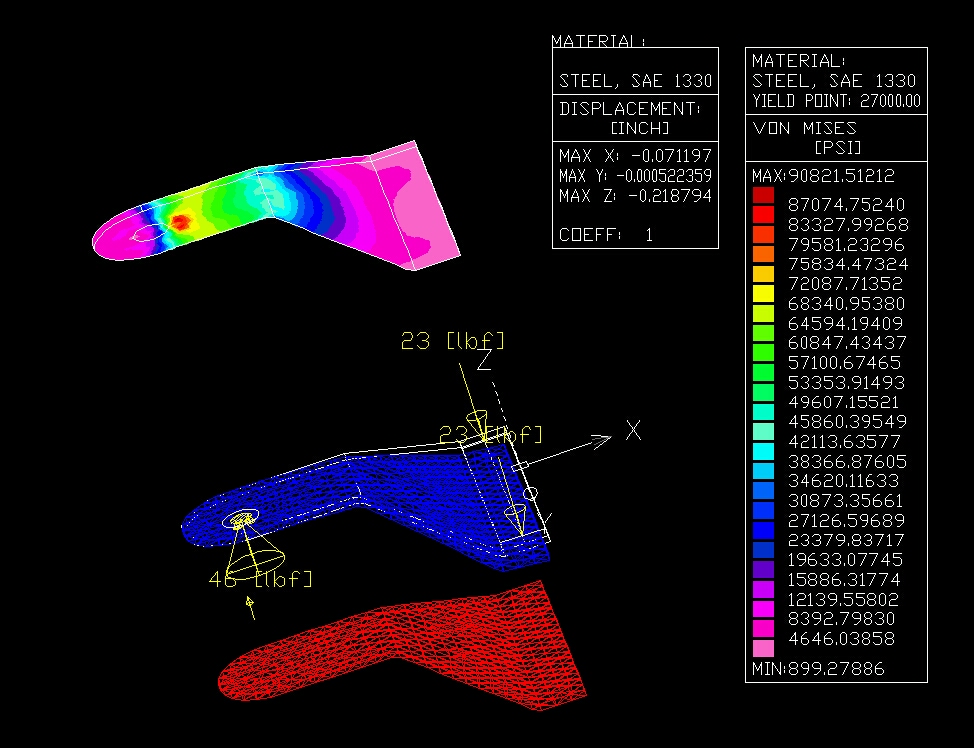
The simulation below shows the seatbelt bracket as you would see it through the rear side window (bottom view). The 46 lb load holding the bracket up (pure bending) is distributed across the area of a 1/2" diameter circle (mounting bolt). If I were to be more accurate, I would have drilled a hole for the bolt. The downward force of 2*23 lbs is the result of the belt tension.
The legend on the right side shows the stress level on the SURFACE of the part. The yield stress being 27,000 psi (27ksi), shown in blue, should be considered the max allowable stress. Stress exceeding yield stress will cause the part to become permantly bent, and can lead to fatigue failure if cycled excessively.
The second legend shows deflection, max deflection in the down (z) direction is -0.218 inches. The blue wire frame model illustrates the deflected shape. This very closely corresponds to the deflections I was measuring. Remember the seatbelt reel is bolted to the bracket, so a small movement in the bracket causes a large movement of the reel and headliner. My bracket was permantly deformed when I had removed it, this further indicates it was stressed beyond its yield point. My seatbelt reel sits about one inch lower than it did new.
Assumptions made:
- The bracket material was assumed to be 1330 steel, mainly because this is a standard part in Mechanical desktop. I would suspect the bracket is made from a very low carbon steel (possibly lower yield stress).
- In addition to 46lbs of pure bending, there is also 46lbs of pure tension (insignificant) applied to this bracket, pure tension loads were ignored in this simulation.
- Also note the seatbelt reel is rigidly mounted to the bracket, the belt force is applied to the reel, not directly to the bracket. This simulation did not take into account the length or diameter of the reel added to the lever arm. The resulting stresses would be higher had this extra length been factored in (just as if you had attached an extension to the pen when it was used as a beam.)
- Belt tension of 65lbs is completely arbitrary, sitting in the car buckled in, this is about how much tension I could pull by leaning forward.
- Remember, the belt attaches at 3 points, the weight of a person is distributed between these 3 points. I think 65lbs is a rather conservative load considering the forces that can result from an accident. The crash test results for Chest Decleration in the 2003 Subaru Forester reached 41G's.
- It is possible that subaru designed this bracket to provide a spring action in an accident. Typically, from an engineering stand point, max allowable stress is some safety factor (half) of Yield stress. I would have designed this bracket to have no more than 13ksi stress when fully loaded. Stress is related to thickness squared, so doubling the thickness would reduce the sress by a factor of 4. (max stress = (M*C)/I).
- Calculations used assume yield stress has not been exceeded.
- Actual angle the belt makes through the belt guide was estimated 45 degrees.
I'm convinced this bracket was designed to be used in pure tension, and it is being misapplied. My solution would be to install a belt guide between the headliner and roof to ensure this bracket is only loaded in pure tension. An 8 year old pulling on the seatbelt shouldn't be able to cave in the headliner.
I had brought my car into the dealer 2 days prior to my seatbelt testing. The mechanic had compared my seatbelt deflections to another forester. Both cars seemed to have some deflection, but my car was about 2 inches, their forester was about 1/2 an inch. This is likely due to the fact that my seatbelt reel was already sitting 1 inch lower and in contact with the headliner. The brand new cars seatbelt reel had 1 inch of gap to conseal most of its movement. The dealership gave me a repair order saying nothing is wrong.
2-5-04 Mike, a represenative of Subaru Of America, spent about 15 minutes inspecting my car and I was assured my seatbelt problem did not seem normal. Mike took pictures of the seat belt bracket, and I had given him a copy of my finite element analysis. Mike suggested an engineer from Fuji Heavy Industries would want to take a look at my car.
4-12-04 I received a generic letter from SOA stating nothing is wrong with car. It doesn't even make mention of any problems with the seatbelt. I ask SOA; "why did it take 2 months for you to come to the conclusion nothing is wrong"? Could it be it took 2 months for you to realize your engineering group screwed up and there is no feasible way to fix this problem. Its much easier and cheaper to ignore a problem than to try to fix it.
4-15-04 I went to a different dealership to have my seatbelt looked at. As soon as I pulled the belt, and caved in the headliner, the mechainic commented there was obviously a problem and he had never seen this before. My service writer told me that this seatbelt design is different than the previous year. The major difference is last years belt bracket used two bolts, my year only uses one. The previous years two bolt design is moment resisting. Any how, long story short; I get my work order mailed to me a week later. It states "could not duplicate customer concern" everything is normal.